

One of my favorite things to do when we visit Canada is to hit the grocery store. Whether it is an upscale store at Whistler Blackcomb ski resort or a nostalgic trip to Atwater Market in Montreal, I am always open to products made in Canada. Their produce seems to taste better than supermarket produce in the U.S. and the fish in the Maritimes is as good as New England’s. The bonus is, all this also costs less thanks to the strength of the U.S. dollar in Canada right now.
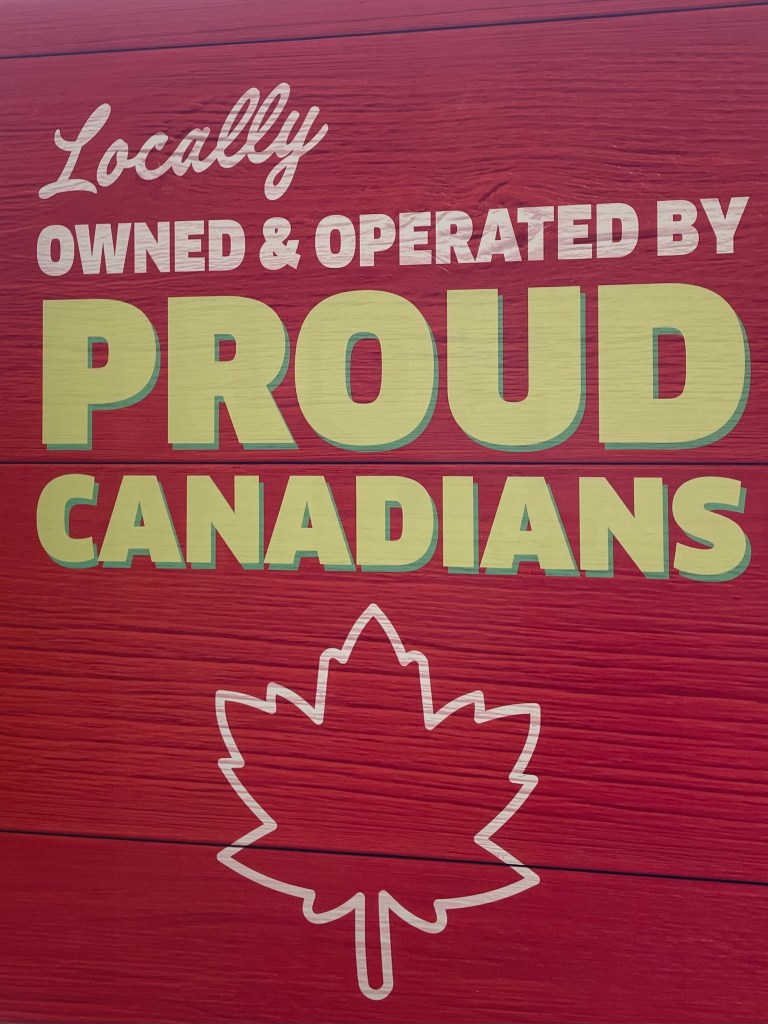
At the beginning of our 3 week trip to the Maritimes, we stopped by Sobeys, a Canadian supermarket chain to pick up essentials for camping. As soon as I walked in the red maple leaf blasted a “welcome to Canada”. It was on nearly every single product. All this was fine until I could not find one single bottle of Pinot Noir from California‘s Russian River Valley or a buttery Chardonnay from Napa.
The boycotts on U.S. products in Canada was made clear. After spending lots of time in Canada at McGill as a college student and countless trips since it was shocking to see Canadian pride on display in this way. So, I had to search online to see what this is all about. I learned that all is not as it seems.
About a month ago, the Canadian Broadcasting Company (CBC) investigated reports of supermarket chains, including Sobeys, for mislabeling imported products from the U.S. and other countries as Canadian. This is known as maple washing. I even found an example of almonds being mislabeled as made in Canada, which is impossible since almonds require a Mediterranean-like climate. That, you will not find anywhere in Canada.
The Canadian Food Inspection Agency (CFIA) could issue monetary penalties to companies that maple wash products. As recent as a week ago, there have not been any penalties issued and the shift towards made in Canada continues.
However, Canada really has moved away from American imports for their processed food, fresh produce and beverages, according to findings in an article from Farm Credit Canada. “Food Processing Skills Canada”, an organization that supports the food industry in Canada, found 76% of Canadians are motivated to avoid U.S. products. This has them reading labels and being more thoughtful and patriotic consumers.
Even with all the friction and challenges that come with change, made in Canada is good for Canada. In fact, a shift like this is good for any region, for any country, and for the economy and the environment. This is good for all of us.
Elbows up Canada, it’s good for you.
 Interstate Eats and Adventures
Leave a comment