
After traveling more than three months across the U.S.A., Louisiana was the first state where we felt like we entered a foreign country. We had to dial in our ears to make sure we understood what people were saying through the drawl of a southern accent.
Before we left Texas, Bruce mentioned to a Texan vineyard owner that he was going to Natchitoches. He gave Bruce a nod. He fondly said in a thick Texan accent, “meat pies.” It was as if he was referring to an old friend.
We found meat pies on a Sunday afternoon when the rest of the stores and restaurants were closed. I remembered an 18-year old had recently said to us, “There’s nothin like soul food on a Sunday after church.“ People must have been dining at home.
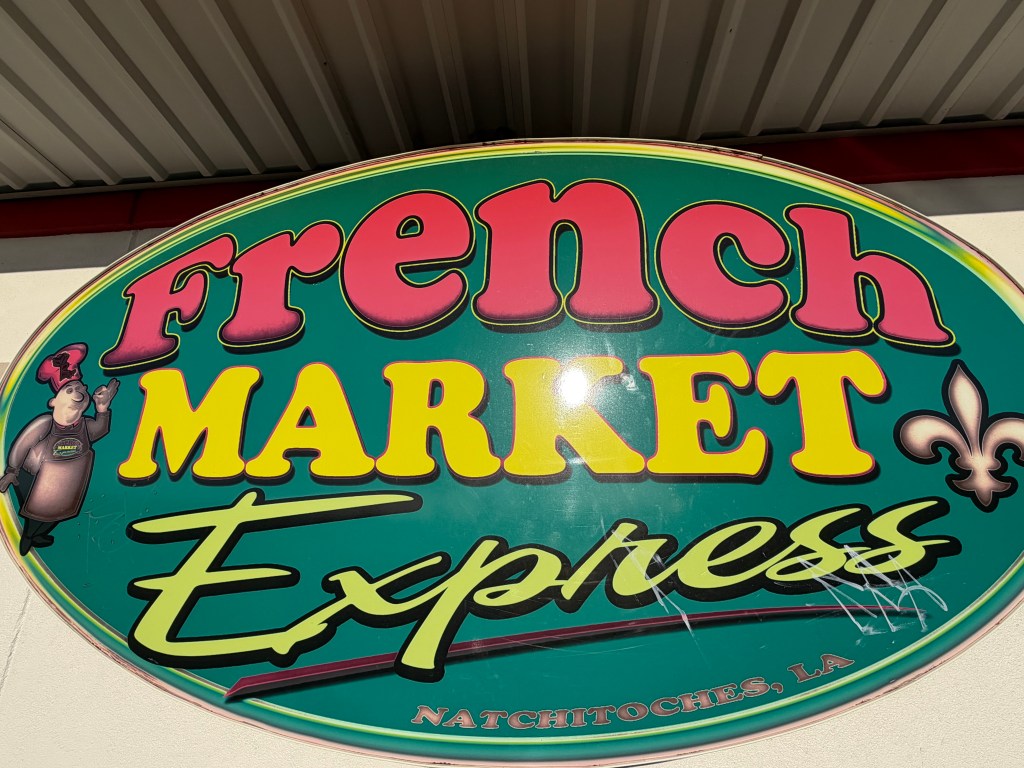
There was a gas station just as we entered Natchitoches with a sign for the French Market displayed across a canopy that covered the gas pumps. This was the place where the Texan picked up frozen meat pies to bring home. Inside, wine bottles lined a curve that led customers to a long bakery case. It began with packaged dessert items like yam cake. At the end was a hot case with the famous meat pies. None of this seemed French to me.
We picked two shrimp étouffée pies and two meat pies. I grabbed a Chianti and broccoli that looked out of place in the case near the desserts. That was dinner. We ate in the van in the parking lot of the Steel Magnolia House where we stayed. The shrimp étouffée pie was stuffed with rice and chunks of shrimp in a light brown spicy sauce. The meat pie filling was a gravy-like mixture of pork and beef, and spices similar to the shrimp. Both pies left us feeling the kick of spice and a full stomach. We both agreed we had to pace ourselves in Louisiana.
Back on the road a few days later, on our way to the Prairie Acadian Cultural Center, we saw billboards promoting more unfamiliar foods. These were fast food places that served cracklins and boudin. I had a spot already picked out for lunch after the museum.
During my visit to the museum, I learned about the harsh deportations of Acadians by the British. I was not aware of the brutality of this period that affected generations of Acadians. I felt a deeper connection to Louisiana when I learned that Cajun evolved from Acadien. As I pronounced it in French, I understood the evolution of the word.
I thought about my own, different Canadian heritage. My grandmother made a type of meat pie with a recipe that came from our Québécois ancestors. The pies contained a mixture of onions, cloves, and pork for a filling.
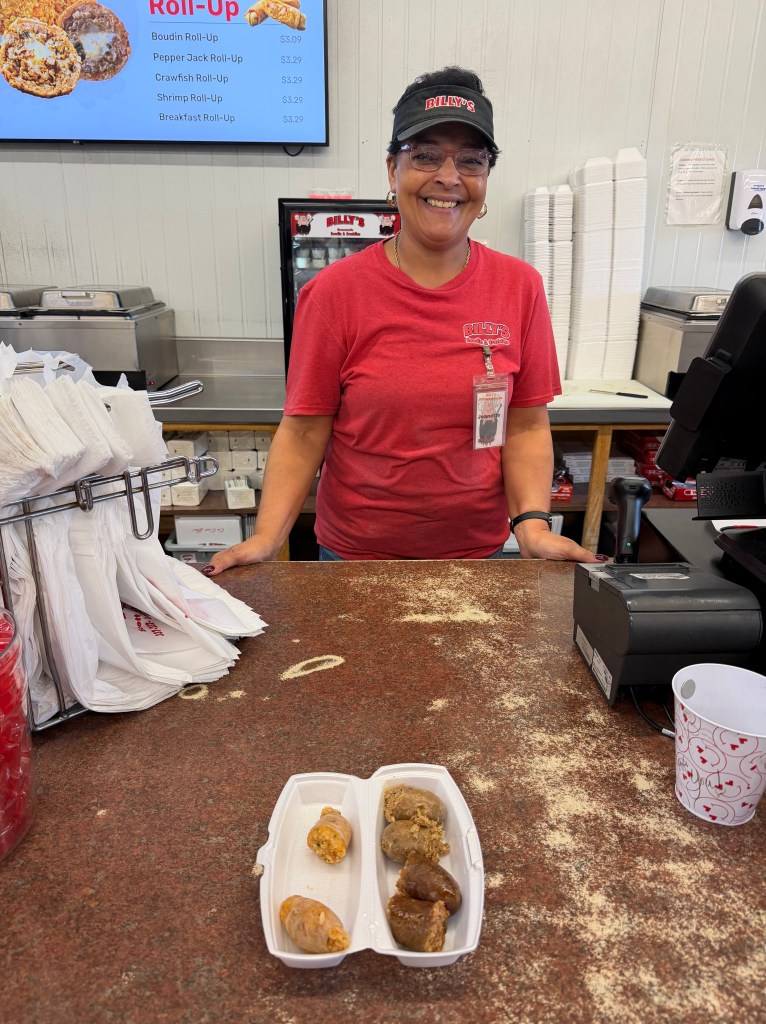
After my history lessons, it was time to find our boudin lunch. Even as the line grew longer at Billy’s Boudin and Cracklin, the woman behind the counter still gave us pieces of three different types of boudin. It was spicy and had rice in it. The boudin in Louisiana was only similar in name to the boudin in France. The woman behind the counter also gave us cracklins that tasted like fried bacon.
We realized very quickly we were no longer hungry. We still bought boudin for the fridge and two boudin sandwiches which were sausage patties on white bread. I asked our guide about the sauces and she said, “It’s like Raising Cane’s sauce.” I still had no idea what to expect, but I got it anyway. She was kind enough to let me take her photo.
We arrived at the campground and made a salad with cucumber, tomato, and avocado for dinner. We both asked our stomachs for forgiveness, knowing we would sin again in New Orleans


Leave a Reply